The 17th Cavalry begins
The 17th Cavalry was constituted in the Regular Army and organized at Fort Bliss, Texas. This regimental lineage preceded the particular H Troop later formed for service with the 198th.
Origins · formation · mission · service
How an armored-cavalry troop formed at Fort Hood became the eyes, ears, and mobile firepower of the 198th Light Infantry Brigade in Vietnam.
The essential distinction
H Troop, 17th Cavalry was an armored-cavalry reconnaissance troop assigned to the 198th Light Infantry Brigade. It was not itself a mechanized-infantry unit.
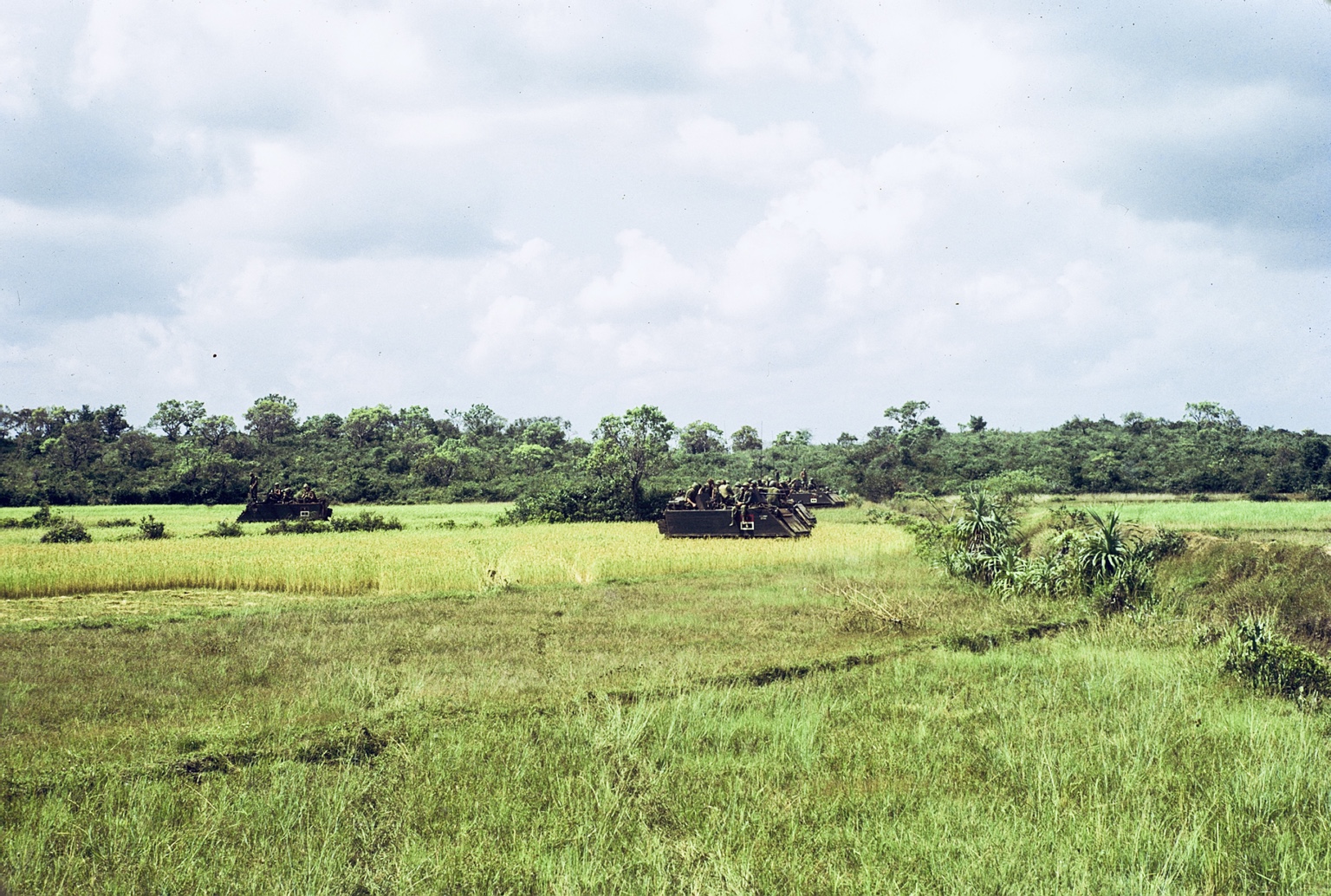
The brigade’s infantry normally fought on foot or moved by helicopter. H Troop’s M113-based Armored Cavalry Assault Vehicles—ACAVs—gave the brigade protected cross-country mobility, reconnaissance capability, and concentrated machine-gun firepower. In plain language, H Troop served as the brigade’s armored eyes, ears, and rapid-response force.
The road to Vietnam
This account separates the older lineages of the regiment and brigade from the H Troop organization that served in Vietnam.
The 17th Cavalry was constituted in the Regular Army and organized at Fort Bliss, Texas. This regimental lineage preceded the particular H Troop later formed for service with the 198th.
The 198th Infantry Brigade traces its administrative lineage to the Organized Reserves. During World War II, its predecessor served as the 99th Reconnaissance Troop of the 99th Infantry Division.
The 198th Infantry Brigade was activated at Fort Hood, Texas, as a separate light infantry brigade. Its flaming-bayonet shoulder insignia was approved on July 3, 1967.
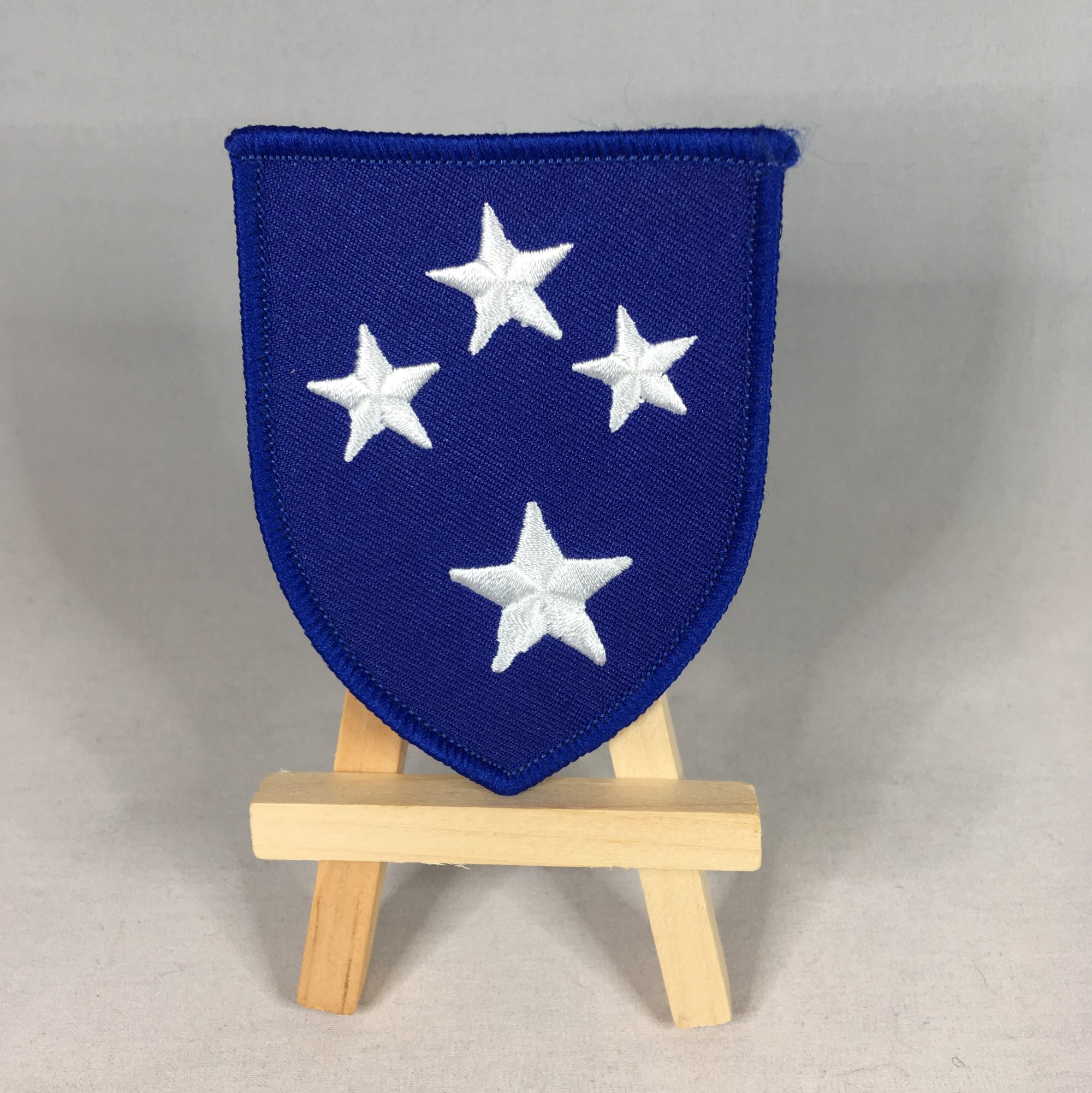
H Troop arrived in South Vietnam as the 198th Light Infantry Brigade’s ground reconnaissance element. The brigade became part of the 23rd Infantry Division, better known as the Americal Division.
From the Chu Lai area, H Troop conducted reconnaissance, screening, route and convoy security, patrols, reaction-force missions, and direct combat support.
The Vietnam service of the original ground-reconnaissance H Troop ended. A separate air-cavalry unit bearing the same designation was formed in 1972 and should not be confused with this troop.
 23rd Infantry Division · Americal
Fort Hood to Chu Lai
The best available published account says H Troop was assembled at Fort Hood during the formation of the 198th. Experienced armored soldiers from the 1st Armored Division—“Old Ironsides”—and 2nd Armored Division—“Hell on Wheels”—helped form its original cadre. The troop then trained for armored reconnaissance before deploying with the brigade.
After reaching Vietnam, the 198th joined the Americal Division in I Corps. This is why records may identify the troop under the 198th Light Infantry Brigade, the 23rd Infantry Division, or the Americal Division: each describes a different level of the same command relationship.
Research note: The precise source units, activation date, original roster, equipment authorization, and deployment orders still require confirmation from official 1967 records.
From the troop record
A recently supplied three-page unit history adds a closer chronology of H Troop’s movements and actions from its first weeks in Vietnam through 1970.
The unit history records the 2nd Platoon escorting a convoy south to LZ Carentan while the rest of the troop operated under the 196th Infantry Brigade on bridge-security, search-and-clear, and convoy-escort missions. On November 16, the troop moved to LZ Bayonet and assumed the 198th Brigade’s tactical area of responsibility from F Troop, 17th Cavalry. The 2nd Platoon rejoined the troop five days later.
Two 2nd Platoon ACAVs and Popular Force troops defended the Binh Son Bridge and district headquarters during a mortar and ground attack. Vehicle 23 was struck by recoilless-rifle fire. The document credits SSG Bandy’s leadership and Cecil A. Smith’s direction of the track’s fire after its commander was wounded.
Guided by a prisoner, H Troop searched a tunnel complex near Dong Binh. The document reports medical supplies, two machine guns, propaganda material, and flags recovered from the tunnels.
Elements of H Troop moved from LZ Bayonet to Hill 68 as three 105mm howitzers from 1st Battalion, 14th Artillery were inserted. Four days later, the position came under attack after a 1st Battalion, 46th Infantry reconnaissance patrol made contact outside the perimeter.
The troop participated in Operation Russell Beach on the Batangan Peninsula northeast of Quang Ngai City. The supplied history places H Troop within the operation’s combat phase and the wider effort to move civilians into pacified areas.
The document records vehicle 36 being disabled by rocket-propelled-grenade and automatic-weapons fire at the start of an operation toward LZ Stinson. It credits SSG Werner Hunley with recovering the damaged track under fire, an action for which he received the Silver Star.
H Troop established a night defensive position later called “Little Bayonet” and fought an extended mortar and RPG attack. The following day, the 3rd Platoon made contact north of the position; vehicle 38 was struck by recoilless-rifle fire and air strikes were called against the enemy positions.
The history records H Troop receiving nine M551 Sheridan armored reconnaissance vehicles on December 10, 1969. In May and June 1970, the troop again escorted large ammunition convoys along the road to Tra Bong Airfield.
Source note: These entries are condensed from a legacy Unit History document supplied to the archive and last saved in 2014. Because the document contains several evident typographical errors, this chronology omits doubtful wording and treats the account as an important lead for continued comparison with daily journals, award citations, and operational reports.
What the troop did
Move ahead of infantry, examine roads and terrain, locate threats, and protect the brigade’s exposed approaches and flanks.
Escort convoys, patrol routes, support mine-sweeping operations, and keep vital movement corridors open around the brigade’s area of operations.
Use the speed, protection, and firepower of the ACAVs to reinforce infantry, respond to contact, and support combat operations beyond the wire.
“The armored eyes, ears, and mobile firepower of the 198th Light Infantry Brigade.”
Published Vietnam unit data lists an authorized strength of approximately 198 soldiers in 1968 and 210 in 1970. Army historical records identify a continuous succession of troop commanders from Captain Walter E. Reasor in October 1967 through Captain Daniel J. Cox in October 1971.
The men, vehicles, missions, and command relationships changed over those four years. The dates provide the frame; the photographs, operational reports, newspaper accounts, letters, and veterans’ memories supply the human history within it.
Sources and continuing research
This is a developing history. Uncertainty is identified rather than filled with assumptions, and new evidence can be incorporated as records become available.
Last historical review: September 2026 · Corrections and documentary evidence are welcomed through the site’s submission area.